Choosing the best women’s backpack is part skill, part inspiration, and part plain hard work, especially if you plan to be living with your pack for months or more.
The Gregory backpack I used across Africa for three years was nearly perfect (like many good things, this model is no longer made).
But styles change and technology improves so it was time to find something new.

How do you choose among the best travel backpacks for women?
I think it’s safe to say that there’s no “perfect” backpack for all women. We’re each looking for different things, we can carry different weights and our bodies come in different shapes and sizes (which matters a lot when choosing a bag). You’ll also need a different bag depending on whether you’re backpacking across Africa for a year or spending a week in Prague.
Since no single backpack will work for everyone, I’ve put together a list of recommendations with backpacks that are popular and have stood the test of time. Your choice will depend on where you’re going, for how long and what kind of activities you’ll need it for. I used plenty of criteria when evaluating my choices – you can click here to scroll down to all the questions I asked during my research.
Women’s backpack comparison table
Trying to compile this list was a challenge, mostly because of the huge choice. From cute backpacks (think Hello Kitty) to trendy backpacks (highly impractical for the most part) to work backpacks (not appropriate in this case), dozens of excellent models jump out for just about any use.
Here, though, I’m concerned with long-term travel, or at least longer term, say a few weeks. (Anything less and I’ll simply use a carry-on bag).
Click here for my ultimate long-term packing list!
How to choose a travel backpack by asking the right questions. Like these.
Reviews are essential to get started on our quest for the right backpack, but each of us has different needs so if we want to narrow it down, we’ll need to ask some of these questions.
How heavy should my backpack be?
Some backpacks are extremely light but the trade-offs are sturdiness and comfort. The lightest backpacks won’t have much heavy padding, and they’ll be light on straps and pockets. Still, when an airline limits you to 8Kg/17lb, and some do, you don’t want half that weight going into the structure of a backpack.
Should it fit on board?
It should but won’t always. That’s because airline rules about what you can carry on board are becoming increasingly stringent. Still, if you can go small, do it. Backpacks can be cut easily and their content plundered, so I’d rather sacrifice a bit in size and make sure mine stays within sight. Carry-on dimensions vary from one airline to another but whatever the size, it’s always going to be smaller than you’d like.
What is the ideal size for a women’s backpack?
It depends on the adventure. An expedition won’t require the same gear as a city hop. Just don’t make the beginner’s mistake of carrying a huge pack – you’ll regret it, and not just because it doesn’t fit on board. What ultimately decides the size of your backpack is, believe it or not, your body weight. If you’re fit, your full backpack shouldn’t weigh more than 1/3 of your weight. The rest of us should aim for 1/4 of our ideal body weight (those of us on the chubby side should use our ideal, not our real weight). Badly out of shape or have health problems? Aim for something even lighter. Weight is more important – your huge backpack stuffed full of fleece will be easier to carry than your small pack filled with books. Of course small and light is best… but if your strength is failing and you need something easy to pull behind you, then yes, wheels.
Should it load from the front, like a suitcase?
Traditional backpacks, especially those used for trekking, load from the top. When you need something from the bottom, everything has to come out. Front-loading means you can fill it like a suitcase, with all your belongings at your fingertips. If you can’t get a front-loading backpack, at least try to find one with plenty of outside pockets so you’ll have the stuff you need the most close by without having to dig through everything you own – or use packing cubes.
What about comfort? How much does that count?
I like wide, contoured, soft straps that divide up the weight across my back and don’t cut my armpits in half: the cushier the better. In addition to wide and soft straps, a good backpack for women should have a chest strap (sternum strap) to keep the shoulder straps together (located a bit higher than it would be for a man for obvious reasons). A hip strap to make sure your hips work harder than your shoulders to carry the weight is absolutely vital – don’t forget that your hips should take the majority of the weight, not your shoulders or back.
Wheels or not?
An interesting option is a backpack with wheels, which you can carry on your back but pull behind you as well. I haven’t found any comfortable enough to carry long distances, although they’re heaven when you need to dash through an airport at high speed – in other words, across a supremely smooth surface. If you’re backpacking around Africa or South America, you won’t have too many smooth wheeling opportunities. And don’t forget there’s a weight penalty for wheels because they need a strong frame. But if you’re staying in modern cities and big hotels with elevators, you might want to try one of these out.
Internal frame or external frame backpacks?
The external frame seems to be able to carry a lot of weight easily around your hips, although it won’t work too well if you’re using it for sport or very rough trails where you’re scrambling because its center of gravity can tip you. In hot countries they tend to sit off your back, though, so they’ll be cooler than the form-fitting more stable internal frame packs. This is a generalization of course but it should be kept in mind. Kelty external frame backpacks are well-thought-of, and I used to own a Karrimor external frame in my late teens – great if you actually need to carry more weight than you should. These days, at least for travel as opposed to trekking, the external frames are in the minority.
An integrated daypack?
Many backpacks have travel daypacks attached to them (like my old Gregory backpack) and granted, if you fill both to the brim you’ll be way over every airline weight and size limit. The idea is to detach the day pack and use that as your purse/briefcase/bag, while using the rest of the backpack as your carry-on luggage, if you’re allowed. Unfortunately, there’s a price to pay for this convenience and often the integrated daypack isn’t half as good as a daypack you’d buy separately.
Lots of pockets!
That’s a matter of personal choice and for me a women’s backpack needs plenty of these – I love to stuff all those little pockets full of things, while other backpackers would rather pack small bags and put them inside the backpack. In the absence of pockets, I use small pouches or tiny packing cubes. Granted, it will be a lot harder to steal something from inside your pack than from pockets on the outside. But I like the convenience of reaching for something easily. Just not something valuable.
How do you slip the darn thing on?
The words ‘slip on’ may not quite apply to backpacks but if you can’t get your pack onto your back relatively easily, you can hurt yourself and pull a muscle. My preferred method is to set my pack upright on a rock or ledge at about the height it’ll be on my back, with the shoulder straps a bit loose. I then just slide my arms through the straps, clip on the hip strap snugly to keep the bulk of the weight on my hips, pull on the shoulder strap adjusters to tighten them and walk off. But you at least need to be able to lift it.
A cover for shoulder straps
Many backpacks have a zippered cover into which you can tuck all the straps. You can then carry the pack around like a suitcase or if it’s really light, like a shoulder bag. This is a great feature because it keeps straps from getting caught in loading ramps, forcing baggage handlers to rip or even cut them off. Your backpack wouldn’t be of much use without straps!
Do I need a plain cover?
This isn’t usually part of the backpack but you’ll need it anyway – a waterproof cover (a waterproof backpack is even better if you’re headed into the rains). Keep it handy because you never know when you’ll be hit by a downpour. And speaking of waterproofing, place your delicate gear – laptops, phones and music – into a dryliner or waterproof pouch so even if the outside of your pack gets wet, your valuables won’t. If you don’t have a cover and it pours, you can always get a large garbage bag and snuggle that over your backpack in a pinch. The cover has another function – it helps protect your pack from thieves by keeping all those zippers and openings hidden.
Women’s versus men’s backpacks
Some women will prefer men’s backpacks. If you’re relatively flat-chested the men’s sternum straps may not bother you but if you’re busty, the strap on a woman’s pack is placed higher – which makes it more comfortable. If you’re getting a man’s pack, make sure those chest straps are adjustable. If you have slim hips and are taller than average, a man’s pack may actually fit you better than a woman’s version. A shorter framed woman would probably prefer a woman-specific backpack.
What color should my backpack be?
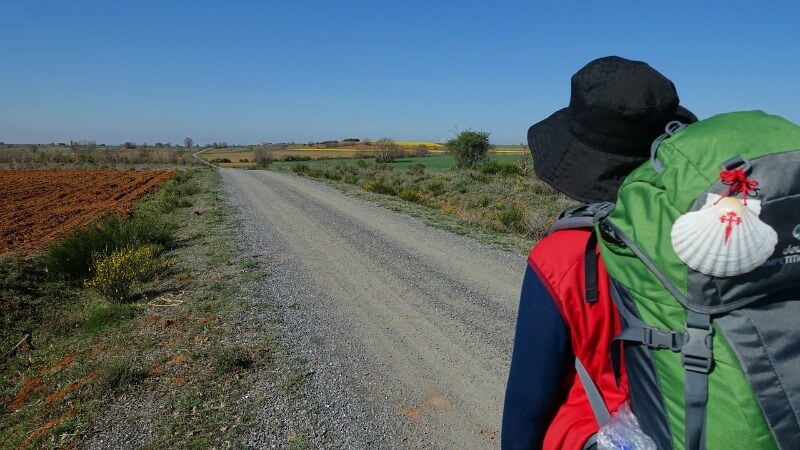
That’s not an easy question to answer. I look for several things: a pack that doesn’t show dirt too much, but is distinctive enough to see when the backpack goes flying off the top of the bus past my window (as it once did in the rural Philippines – I barely had time to scramble off to be reunited with it as the bus sped off into the distance). On the other hand, if it’s too bright and shiny it may look desirable and worth stealing so backpack beauty needs to strike a delicate balance.
What now?
If you’re buying your pack in a shop instead of online, take advantage of the fact by running a few tests before you leave:
- Put some heavy things into the pack and walk around the shop with it. Walk a lot.
- Are you comfortable? Does anything pull, tug or pinch? If it does, adjust it properly.
- Make sure your straps are the right length and ask the salesperson for help if you can’t resize them yourself.
- Lean your head back. If it hits the backpack, the pack is too tall.
- Look at the buckles and straps to make sure they’re sturdy. Buy a few extra – you never know when one might break.
- Know the backpack’s weight. Some can weigh several pounds or kilos so remember your weight allowance. A heavy backpack just means you’ll be able to take less stuff with you.
- Make sure it’s a snug fit around your hips, because this is where most of the weight will be carried.
- Consider a pack with a mesh back to avoid the pack sitting directly on your back, causing you to sweat from heat.
- And once you choose your travel backpack, sew something reflective on it. You’ll be glad you did if you’re ever stranded on a busy road at night.
Each of us is different and my perfect pack won’t be yours. The best women’s backpack ranges provide plenty of choices, but you may have to try a number of them before you decide. In addition to the ones I’ve mentioned, popular packs include different models of the Kelty backpack, the Swiss Army backpack and High Sierra. There are plenty more.
Just don’t skimp: along with your women’s hiking boots and hiking sandals, this is one of those pieces of equipment you’ll be wearing the most. Spend the extra hundred dollars if it means getting the perfect pack.
Packing a backpack for travel
First things first, decide what you need to take with you. This is obviously different depending on what kind of trip you’re taking: if you’re hiking in a remote place or if you’re hostelling in urban European cities. Check out my packing list below to help you decide what to include.
Next, be harsh with your packing. Even the fanciest bag with the best suspension system is going to hurt your shoulders and back if you pack too much stuff. Plus, you won’t have any room to bring home treasures. Lay everything you want to take on the bed. Take half the stuff away. And then half of that. And what you’re left with just might be what you can manage to carry.
Once you know what you need to take with you, invest in packing cubes. Seriously! These are the ones I use and love, and I wouldn’t pack a bag without them. Especially if you have a top-loading backpack, you’ll appreciate that you aren’t aimlessly digging through your bag to find that one item: simply organize the packing cubes and search for the specific cube holding said thing.
Not to mention these bags allow you to compress your items, giving you more space for the things that don’t fit in cubes (like your cooking gear). Depending on what kind of travel you’re doing, you may want a toiletries bag that you can hang in the shower, or an electronics organizer that keeps cords, chargers and memory cards safely stowed away.
Make sure if you’re planning a real hike that you invest in quality dry bags. If your bag doesn’t come with a rain cover, buy one. While yes, you can tuck your phone into a standard ziploc, high-quality waterproof gear will give you peace of mind and possibly save you hundreds of dollars.
If you’ll be boarding a plane, put items that you’ll need to show to airport security (laptops, spare batteries, toiletries, etc.) in an easily-accessible pocket, and please read the rules: don’t show up with a huge tube of sunscreen that the agent will throw away. Not only does it slow down the security process, big tubes take up too much space and weight. In fact, you could just purchase small toiletries upon arrival at most destinations.
PIN THESE PICTURES AND SAVE FOR LATER!