December 29, 2019
There is nothing worse–or more dangerous in this case than being unprepared when it comes to traveling. A travel mosquito net is just one of those things every traveler needs in order to be prepared and comfortable.
Don’t feel like reading all this? Here are my top recommendations:
- Eco-Keeper Bedbug Tent: Easy to put together, plop it on your bed and get in.
- SansBug Pop-Up Freestanding Mosquito Net: Perfect if you don’t want to spend a single second setting it up (but you will have to spend a bit of time folding it away).
A travel mosquito net is possibly the single most important way to stay healthy when traveling in the tropics – Not to mention you’ll sleep far more soundly and won’t need to spend the night swatting the buzzing wildlife

Remember, 350-500 million people worldwide are infected by female Anopheles mosquitoes (the malaria-carrying mosquito) each year. Not to mention the threat of Zika in some places) too. Now, I don’t want to scare you, but there are many more diseases you can catch from insects:
- Dengue, yellow fever, or West Nile Virus from mosquitoes
- Lyme disease or typhus from ticks and lice
- plague from fleas
- sleeping sickness from tsetse flies
- Some encounters are just plain revolting, like leeches, or poisonous, like scorpions or snakes.
Many of these illnesses can debilitate you for life – or worse. So when it comes to travel, it’s always best to be prepared.
Having slept outside in many countries where these critters are common, I can’t bring myself to travel without serious protection. To me, that means a mosquito net for travel, mosquito spray, or at the very least, some kind of mosquito-repellent clothing.
Portable mosquito net for travel
If you’re already convinced you need to take some kind of bug net on your travels, see my recommendations in the comparison chart below for the best mosquito nets for travel. But if you still need a little more convincing, see the more detailed explanations at the bottom of the comparison chart.
What is a mosquito net and why use one?
Bug netting of any kind will help keep you safe by keeping out the mosquitoes that carry malaria (which can kill you). A mosquito net is a mesh material made of tiny holes through which mosquitoes can’t pass; insect netting keeps you separate from potential bites.
A mosquito net also keeps other critters out, like creepy crawlies or falling geckoes. I wouldn’t dream of traveling without one when heading to warm, humid places.
It’s especially important if you’re traveling on a budget or off the beaten track. Air conditioning helps keep mosquitoes at bay but if you’re staying in huts or outdoors or with open windows – there’s nothing to protect you.
The most effective and best travel mosquito nets should have a close mesh – and please check the specs to see if they are No See Um-proof. The term No See Um-proof just means it is designed to keep small insects (no-see-ums) out.
While cotton may seem more natural, it collects dampness and weighs more than a synthetic fiber so I’d opt for polyester-type nets.
There are many kinds of nets – a bug net for bed use, a portable mosquito net or a mosquito net tent.
Types of mosquito net for travel
There are several types of insect nets and we’ll look at each in turn. The one you use will depend on how you travel.
The best travel mosquito net for beds
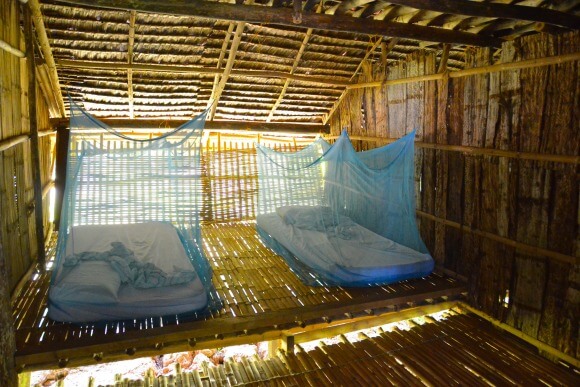
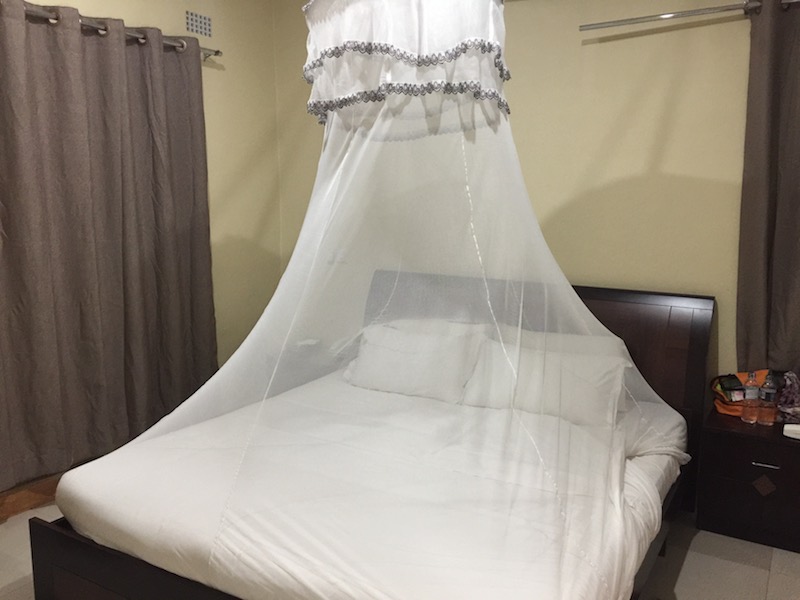
Let’s start with the standard travel mosquito net – without a frame. A travel mosquito net for a hotel bed is usually a hanging mosquito net, which is often included with your room in places where mosquitoes are prevalent.
Typically, this mosquito sleeping net is a square or rectangular type of insect netting with a ring (or two) that is attached to a wall or ceiling. The travel mosquito net for the bed should be large enough to tuck under the mattress without touching you. If it touches your skin, the mosquito can simply land on it and bite you right through it. And trust me, they will!

This plain foldable and portable mosquito net is an inexpensive product that will do what is required of it: keep mosquitoes out.
It is also the best mosquito net for a bed and a great backup DIY mosquito net; small and light enough to carry with you, and it takes up little room. You might consider bringing one along in case your room doesn’t have one, or worse, there is one, but it has holes in it.
You can easily wash it and hang it out to dry.
As long as you’re not terrified of anything crawling into your bed – something could get in if you’ve been a bit careless when tucking yourself in – then anything made with extra-fine mosquito net material should more than keep you safe from mosquitoes the diseases that they carry.
Mosquito net pros
✓ It’s cheaper and lighter
✓ You’ll usually have more headspace around you
✓ A certain aura of nostalgia
✓ Smaller when folded
✓ Nothing to break
✓ If you’re not traveling solo, there is such a thing as a mosquito net for double bed use
Mosquito net cons
✕ You constantly have to tuck it in – every time you get in and out of bed
✕ No barrier against bedbugs (which can appear even in the poshest establishments)
✕ You need nails or hooks to fasten it to walls or ceilings – and sometimes that’s not possible
✕ If not tucked in properly, creepy crawlies can get in (and I don’t like the idea of spiders or even snakes dropping by for a midnight visit)
✕ An overlapping net entrance can often allow insects in if you’re not careful
So like it or not, while there are some significant advantages to the traditional mosquito net, there are also quite a few downsides.
And that’s why I travel with a mosquito net tent. I have not one, but two of these, just in case I lose one. That’s how important it is to me!
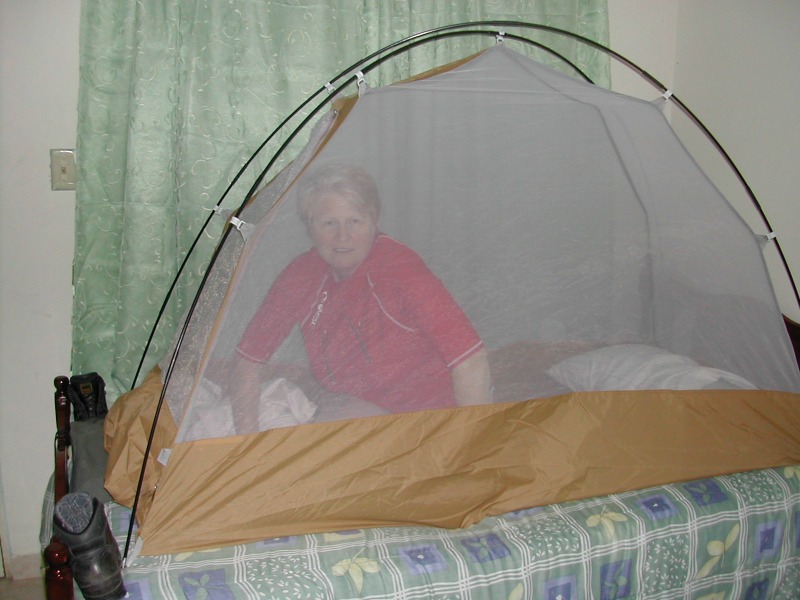
The mosquito net tent
The free-standing mosquito net tent for bed use is a brilliant invention, and I would not have made it through three years of backpacking across Africa and Asia without one (two, in my case – I lost mine, got another, and found the first one!)
This is basically a tent, but – with a few notable exceptions like the Kamp-Rite Insect Protection System – it has mosquito netting fabric rather than the waterproof cover you’d usually expect in a normal camping tent.
The bug net tent is for women willing to spend a bit more for a more insect-proof product – and for those heading off into areas that are more remote or where mosquito tents or nets may not be easily available. While I didn’t have much use for mine on my South Africa vacation, I could not have made it through Mozambique, Zimbabwe, and Malawi without this kind of protection (I would have been eaten alive and certainly sleep-deprived).
A good pop-up mosquito tent will also keep out most other creepy crawlies and that, to me, is a huge benefit, especially if you’re in a rural area. If you’re health conscious or even a bit squeamish, this tent is one of the best mosquito nets for traveling.
Mosquito tent pros
✓ It’s free-standing, which means no worries about nails or hooks and once it’s up, it is ready to use
✓ It’s properly sealed, which means mosquitoes can’t get in, under or around it (nor can other critters – or bedbugs)
✓ You can get in and out without having to tuck yourself in each time – just unzip, and zip again
✓ Zippers will also keep errant mosquitoes from getting in
✓ You can leave it set up during the day, no rolling up – and no bugs will get in while you’re out
✓ The netting isn’t touching you and as long as you keep away from the sides (easily done) you won’t get bitten
✓ Many have internal pockets for such things as phones or flashlights or important papers
✓ You can keep your shoes and clothes at the bottom overnight and avoid any surprises in the morning (just check them first – don’t invite critters in!)
Mosquito tent cons
✕ It’s heavier to carry and takes up more space in your luggage
✕ It is more expensive (but also far more robust)
✕ It can be warmer inside, especially if it has a waterproof – plastic – floor (I use a travel towel, silk sleeping bag liner, damp T-shirt or sarong to lie on)
✕ There are more pieces, like poles and zippers, so more can go wrong
✕ I’ve worried sometimes that setting it up on a bed in someone’s house might appear insensitive, as in “I don’t feel safe here” but – I’m afraid that given the potential deadliness of a mosquito bite, I’d rather take that chance; I do explain where I can
Bug nets for camping
If you like to sleep out in the wild, your tent may already have some kind of built-in mosquito protection. If not, make sure you take along a mosquito net for camping. You can keep it simple, for example with this compact mosquito net for camping, for tent or sleeping bag. You can keep it simple, for example, with this compact mosquito net for camping, for a tent, or sleeping bag.
It’s the best mosquito net for backpacking; you can use it inside your tent or outdoors while enjoying the sunset – it’ll do the trick, and it’s better than being unprotected. It’s also very easily rolled up and won’t take up too much space in your women’s backpack.
That said, if your destination has a serious malaria problem, I’d think twice about sleeping out of doors and opt instead for an enclosed room with a proper bed net.
Mosquito net clothing
Yes, there is absolutely such a thing! You can get everything from a mosquito head net to permethrin-treated clothing – and in some cases, these items might be perfectly appropriate, especially if simple mosquito repellent won’t do the trick.
I find mosquito-repellent clothes to be useful where the threat of malaria is really high or if you don’t want to be eaten alive. They’re particularly useful to pack for tropical regions if you plan to be outdoors all day, say in the rainforest or near a swamp or wetland. Most times, though, repellent products you spray on will be enough and should definitely be added to your first aid kit checklist.
A few other types of mosquito netting
Mosquito nets come in all shapes and sizes – and uses.
- Black mosquito netting vs. white: you can see through the black netting more easily, but the white will keep bugs away better. The same goes for dark clothing – wear lighter colors to keep the bugs away.
- Mosquito net fabric: yes, you can buy the fabric and sew it up yourself any way you want. In fact, you can even buy bulk mosquito netting if you need it in quantities.
- Mosquito net curtains: you can make these yourself – they could be useful if you’re staying in one place and want to build a frame or an enclosure to keep mosquitoes away. You could do the same for mosquito net for windows but again, this is only worth considering if you plan to stay put for weeks. If you’re using a vehicle for camping, these are a must because your indoor lights will attract all sorts of insects.
Treated mosquito net or not?
Before buying a mosquito net or tent, you need to decide whether to go for a permethrin-treated mosquito net or whether to opt for a simple untreated net.
The advantage of permethrin, a strong synthetic chemical, is its effectiveness.
Most mosquitoes won’t survive contact with it so you’ll have fewer chances of being bitten. Permethrin treatment isn’t permanent – you’ll have to re-treat the net (and your clothes, if you spray them) with permethrin spray every so often.
While it’s not known to be toxic to humans (keep it away from your pets – it can kill them with the fumes if it hasn’t dried yet, which is why you have to spray outdoors), many people abhor chemicals and simply refuse to use them if at all avoidable.
If that’s your case – get an untreated net.
My own choice?
A travel mosquito tent. For those who have been writing and asking about mine, the model I’ve been using for years is the Longroads Travel Tent – sadly I don’t think it’s made anymore but my recommendations above would make good substitutes.
A few words of caution…
Even if rooms have their own mosquito nets, check them carefully. Years of wear and tear may have left holes in the net – and if mosquitoes can get in, the net will be useless.
Remember, avoiding malaria, dengue fever, and Zika should be right at the top of your travel health list! And please… don’t leave home without your travel insurance.
Best mosquito nets for travel: reviews
There are plenty of products on the market and the comparison chart at the top of this page maps out some of the most popular. But if that’s not enough information for you, here are details for four of the best.
Personally speaking, I would rather leave clothes behind than travel without my mosquito tent. It’s not the sexiest travel item I have but it most certainly is one of the best bits of travel gear I’ve ever bought, and I’m a relatively adventurous traveler.
How you can help
It’s not just about us, either. Malaria is Africa’s biggest killer: a child dies of it every minute, deaths that are preventable. While we sleep comfortably under our nets, millions of people, especially the poorest, can’t afford them. United to Beat Malaria is a great grassroots campaign that raises money for bed nets. To keep up with developments, read up at RBM End Malaria, the global partnership that fights the disease.
— Originally published on 03 January 2011
Pin these pictures and save for later!