Getting your international travel vaccinations (known in the UK as travel immunisations) is a question of common sense, especially if you’re going to places where there is risk.
But wading through the many varieties and requirements is a bit like walking through a maze: How long is a yellow fever vaccine good for? How many vaccines can be given at once? What are the shots needed for Thailand? How much are vaccinations?
This page will attempt to answer some of these frequently asked questions.
ARE TRAVEL VACCINATIONS NECESSARY?
First, what exactly is a vaccination, anyway?
Travel vaccines, also called travel immunizations, are shots or jabs you should get before going to countries where infectious diseases are common. Usually, these are diseases your body isn’t accustomed to because they are uncommon or non-existent in your country – things like malaria, cholera, typhus or yellow fever, to name a few.
Simply put, a vaccine exposes your body to a disease after the disease has been disarmed. This allows your body to build up its own protection and fight the disease. Some countries insist you have specific vaccines before they let you in.
For vaccines to be effective, you may need to get them weeks before you travel, so make sure you see your doctor a good 6-8 weeks before you visit an infected area. Some vaccinations take several weeks to become effective.
This information will at least help you get started. A word of caution – some of these vaccinations are not safe if you’re pregnant so make sure you tell your doctor if you are, even in the earliest stages.
DISCLAIMER: I am a writer, not a doctor, and none of this is medical advice. I have traveled for 50 years to nearly 100 countries and have gained some experience on what works or doesn’t work for me. I share that experience in this series of articles, which can be your starting point for research. But when it comes to actual prevention, treatment and care, ALWAYS consult a qualified medical practitioner.
INTERNATIONAL TRAVEL VACCINATIONS: WHAT DO YOU NEED?
There are three kinds of vaccinations for international travel: routine (which you should have had as a child), advisable (if you’re traveling to countries that have the disease) and mandatory (you’ll need it before they let you into the country).
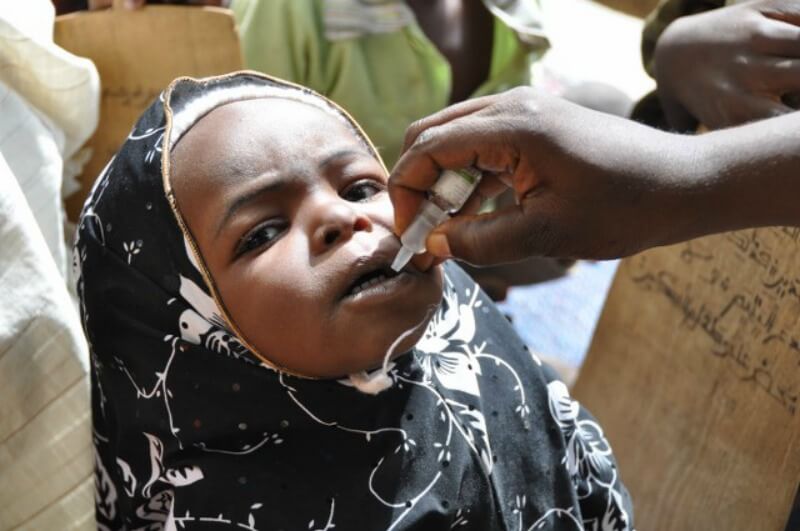
Routine vaccinations are those that should be kept up-to-date no matter what, even in-between trips. These include such things as whooping cough, measles, tetanus, diphtheria and polio. They haven’t been eradicated, and outbreaks do occur, even close to home and may require boosters every few years.
There are a number of advisable travel vaccine recommendations- getting these depends on whether the areas you’re headed for are known to have this disease. Each country has its own, different regulations.
THE MOST COMMON DISEASES AND REQUIRED TRAVEL VACCINATIONS
Hepatitis A is caused by contaminated food. Be especially vigilant with seafood (it could come from polluted water), and make sure all food is cooked properly and your water is clean. Wash your hands often. Hep A is potentially deadly, especially if you’re over 50. The vaccination is very effective. (Lasts for 20 or more years.)
Hepatitis B, on the other hand, is a sexually-transmitted infection that affects the liver. It is passed through sex, blood and saliva, including unscreened blood transfusions, tatooing, sharing needles or from mother to child. It is difficult to treat so if you plan to have sex make sure it’s as safe as possible, bring new syringes with you if you’re traveling for many months in poor and unsanitary destinations, and don’t go near needles unless you’re sure they’re sterile. I usually carry a set when I’m heading off the beaten path where I might find a health practitioner but no clinic, along with a doctor’s prescription: you don’t want border guards assuming you’re an injecting drug user. Many other travelers recommend against taking these along, so your choice. (Lasts 20 years.)
A certain type of meningitis (group A) is a serious threat to travelers and can be deadly so vaccination is a must if you’re traveling to a region with an outbreak – check first. The disease is spread by an infected person who coughs or sneezes. (Lasts 5 years.)
You can catch rabies if you’re bitten or scratched by an infected animal, usually dogs, foxes or bats – so stay away from animals you don’t know. If you’re planning on visiting a high-risk area, a rabies vaccine might be worth considering (it’s not a common one to get and involves a series of 3 injections). It won’t stop the disease but might buy you time. This is a serious one so if bitten or scratched, get to a doctor immediately. It is curable, but will kill you if you don’t get immediate medical care. (Requires a one-year booster but then lasts 3 years.)
Catching cholera is relatively difficult – it is spread by a bug through water and food contaminated by sewage, but it takes a lot of bugs to get sick so chances are you won’t catch it unless there’s an epidemic where you’re going. Cholera can provoke severe diarrhea, dehydration and even death but proper hygiene should prevent it as long as there’s no epidemic present. Like hepatitis A, cholera can be caught from raw or undercooked food, especially seafood from dirty water. (Lasts 2 years.)
Another illness spread by food and water – this time contaminated by feces – is typhoid. As is the case with cholera, it is easily treatable with antibiotics and there is an effective vaccine. Be particularly vigilant where hygiene is minimal. (Lasts 3 years.)
Japanese encephalitis is rare and found only in the Far East. This isn’t a common vaccination for travelers so check the situation before you go. (Requires a booster but should last 1-2 years – although that’s not certain.)
The only mandatory jabthese days is the yellow fever vaccine for entry into some developing countries, or if coming from a country where yellow fever is present. Here is a list of yellow fever countries that require the vaccination for entry. (It used to last 10 years but the World Health Organization has extended its validity to lifetime.)
Avoiding malaria
Malaria is common in many parts of the world and has been around since Antiquity. It was thought to come from bad air, or ‘mal aria’ near swamps.
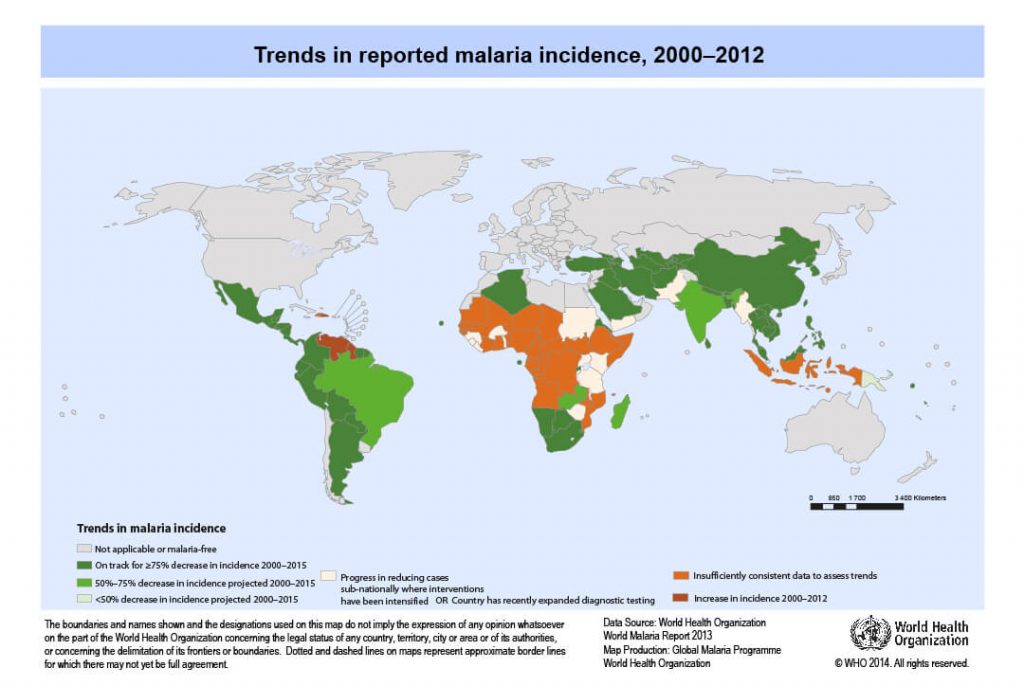
There are three key things you should know about malaria.
First, there is no vaccine for it. Second, nothing can protect you 100%. And finally, it can appear months after you’ve been bitten.
Avoiding it altogether: your first line of defence
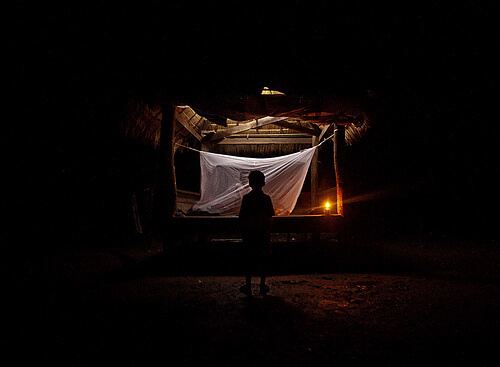
The female anopheles mosquito, which carries malaria, tends to bite at night, from dusk to dawn. You can avoid bites by wearing long sleeves and trousers; wearing light colors; use DEET – here is what you need to know; spray your room; use your air conditioning or a fan; use your mosquito net (don’t forget to tuck it under your mattress) or a self-contained travel mosquito net or tent with the smallest mesh possible; try to return indoors before dark.
Keeping mosquitoes away is only part of your protection: the principal way of avoiding malaria is by taking antimalarial pills. They may not be 100% effective, but more than a million people die each year of the disease and you don’t want to be one of them. A specialist will tell you what to take, depending on where you’re going.
If you’ve failed to avoid malaria
Even if you’re careful, you may still get malaria so know the symptoms: similar to flu, including fever, chills headache, aching muscles, tiredness, nausea and diarrhea. It usually starts with the shivers, after which you get hotter and hotter until you sweat profusely.
If you develop these symptoms when you’re in a malaria risk area, get to a doctor, not in a few days, but immediately. Otherwise you may be at risk of developing cerebral malaria, which can be fatal. A blood test, available throughout the developing world, will determine whether you’re infected, and treatment is widely available.
Avoiding malaria is one thing, but there’s also dengue fever, a painful disease from mosquito bites that can take a long time to subside and makes your bones feel like they’re breaking (this from a friend who caught it in Thailand). Like malaria there is no vaccine, and also like malaria, dengue requires avoiding bites by covering up and using repellent. It is found in similar climates, tropical and sub-tropical, with the difference that mosquitoes bite during the day.
The bad news: where malaria and dengue coexist, you’ll have to take major precautions both day and night.
Yellow fever is a viral infection spread by mosquito bites. Unlike malaria, (for which there is no vaccine), you can catch it both in the city and in rural areas, although it tends to be limited to the interior of countries. Also unlike malaria, these mosquitoes bite in daytime. There is no treatment for it, although you can get care for some of its symptoms – jaundice and kidney failure for example.
TRAVEL VACCINATIONS BY COUNTRY
To make things easier for you, I’ve provided links to some of the most common countries that list required vaccinations for travel.
Travel to Asia vaccinations
- Vaccinations for India
- Vaccinations for Bali and Indonesia
- Vaccinations for Philippines
- China travel vaccinations
- Vietnam travel vaccinations
- Sri Lanka travel vaccinations
- Thailand travel vaccinations
- Immunisations for Borneo
Vaccinations for Latin America
Vaccinations for Africa
If you’re headed to another country, check out the CDC travelers health destinations page or the World Health Organization’s International Travel and Health.
WHERE TO GET VACCINATIONS FOR INTERNATIONAL TRAVEL
You can get your travel shots in a number of places, depending on which country you’re in:
- You can get some travel injections and most oral prescriptions from your regular doctor.
- A doctor specialized in travel medicine should be able to provide you with the travel health advice you need.
- Most urban centers will have at least one specialized travel immunization clinic.
- Many major hospitals will have travel health services
Make sure you check ahead before going to a travel health clinic or travel doctor: your travel clinic may not have all vaccines needed for travel and may have to order them if the vaccines are uncommon or have run out.
You can find a good online list of travel vaccines on the CDC Travel Destinations page, and a list of travel clinics around the world from the International Society of Travel Medicine database.
INTERNATIONAL VACCINATION CERTIFICATE
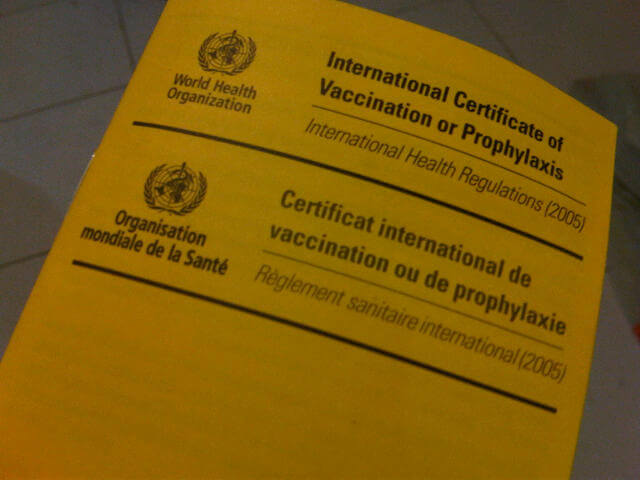
When you make your first appointment at the travel vaccine clinic, let your doctor know you’ll be needing a yellow card – or International Certificate of Vaccinations. Each time you get a new vaccination, it’ll be stamped in this yellow booklet. Leave a photocopy at home when you travel or email one to yourself – if you lose it you’ll at least be able to keep track of your upcoming booster shots.
Also, not all diseases have vaccinations. For example, there is no vaccination against ebola or HIV.
An important point is that even experts disagree on the specifics of international travel immunizations so please, read up carefully about risk. The level of risk will be different if you stay in the city or if you travel widely through the countryside, and just because a country as a whole is listed as a risk doesn’t necessarily mean you need the vaccination if you’re only visiting part of it. A holiday in Rio de Janeiro and a month-long adventure trek in the Amazon are two very different trips, for which you’ll need different travel vaccinations.
No overseas vaccinations are 100% effective, so take sensible precautions, whatever else you do.
WHAT IS THE COST OF TRAVEL VACCINATIONS?
Don’t let the cost of travel vaccinations deter you. They can be expensive, but they could save your life.
Each vaccine can cost somewhere between US$50-100 in the US, and upwards of GBP 50 per vaccine in the UK. Or if you’re traveling longer term, you could wait until you’re in a country like Thailand and pay half the price there. But whatever you do, make sure you have enough time to get them before you visit countries with high disease risk.
Remember to check when to get travel vaccines: some have specific windows before they become effective. You may have to get some of your travel jabs a month or two before you travel, while others will be fine if obtained just before you travel.
— Originally published on 10 January 2011
PIN THESE PICTURES AND SAVE FOR LATER!