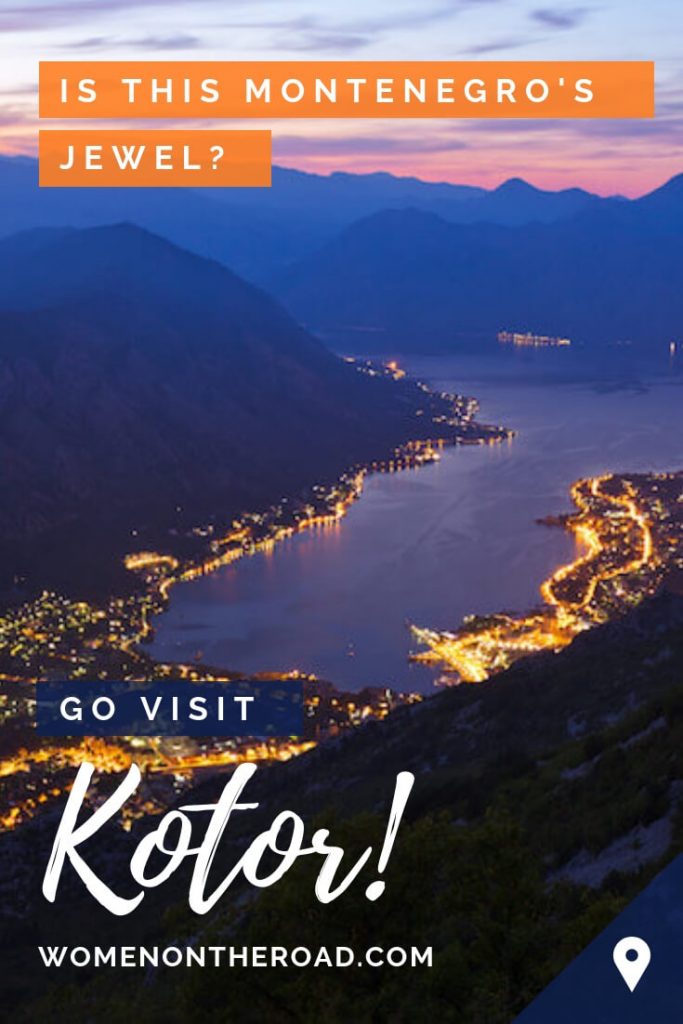
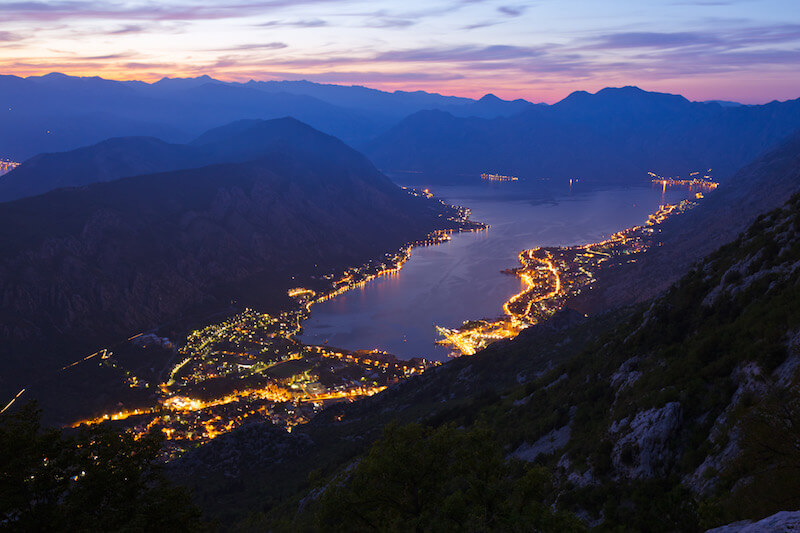
Approaching Kotor from the south, the town slowly unfurls: first the outskirts, then the sturdy walls of the old town, and finally the long sweep of the bay, calm and blue, bordered by a narrow road line with elegant italianate villas.

What to do in Kotor, Montenegro – and what you should know before you go
The Bay of Kotor is even more beautiful than most photos suggest, with hidden stairways winding up the mountain and clusters of flowers spilling over ancient stone walls. The setting is striking at worst, sublime at best.
(If you don’t have time for a full trip to Kotor, you can easily visit on a day trip from Dubrovnik.)
Old Town Kotor – even in the rain
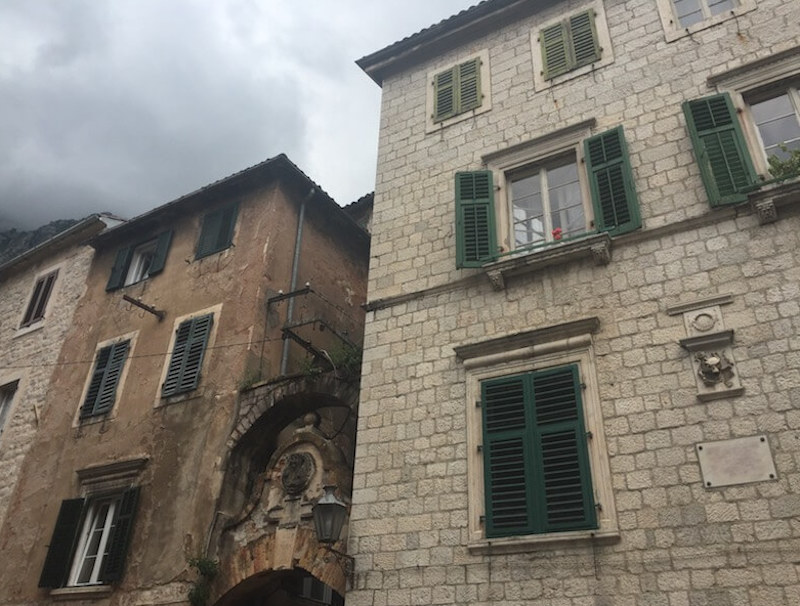
Rain is often the real test of a place’s charm, and Kotor passes with ease. When the skies open, water pours down the narrow lanes and off the red-tiled roofs, yet the old town remains atmospheric. If seeking refuge under one of those large restaurant umbrellas, avoid sitting where two meet – rainwater tends to find the gap.
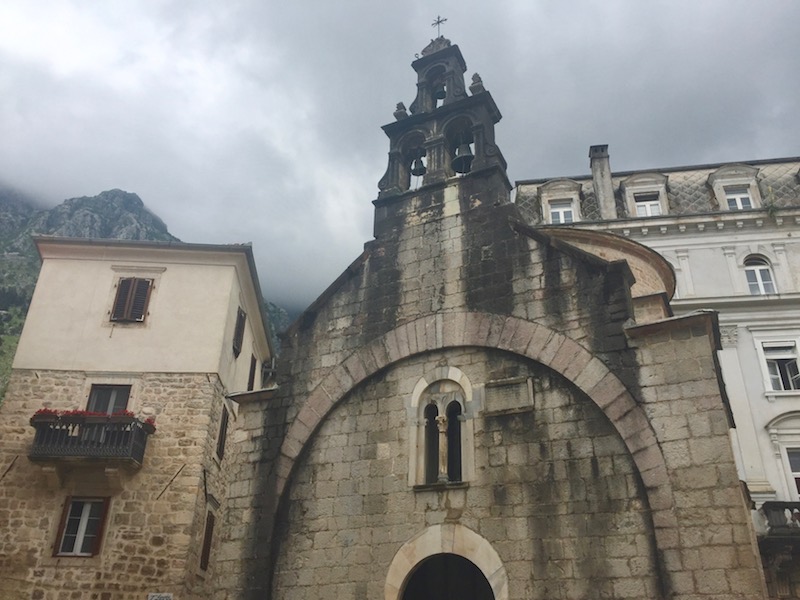
Once the initial rush to stay dry subsides, a walk through the wet, glistening streets reveals why Kotor’s old town is so memorable. The medieval walls, archways, and church towers seem even more vivid under a veil of rain.
Buildings much as they’ve always been
Rain or no rain, the old town remains striking
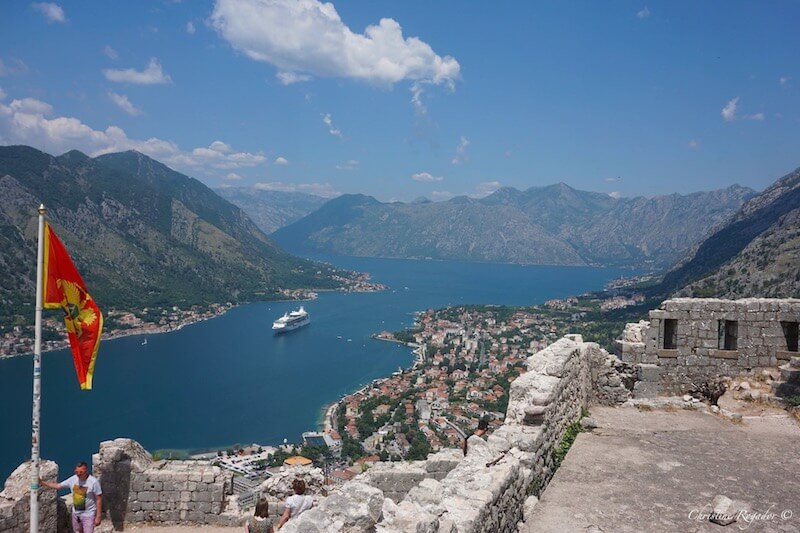
Climbing to St John’s Fortress Above the Bay of Kotor
The climb to St John’s Fortress (officially St Ivan, or St Giovanni to locals) is not for the faint-hearted – more than 1,300 steps lead up to the ruins above town. Those who make it are rewarded with breathtaking views of the bay and the rooftops below. The path is steep and exposed, so bring water and proper shoes.
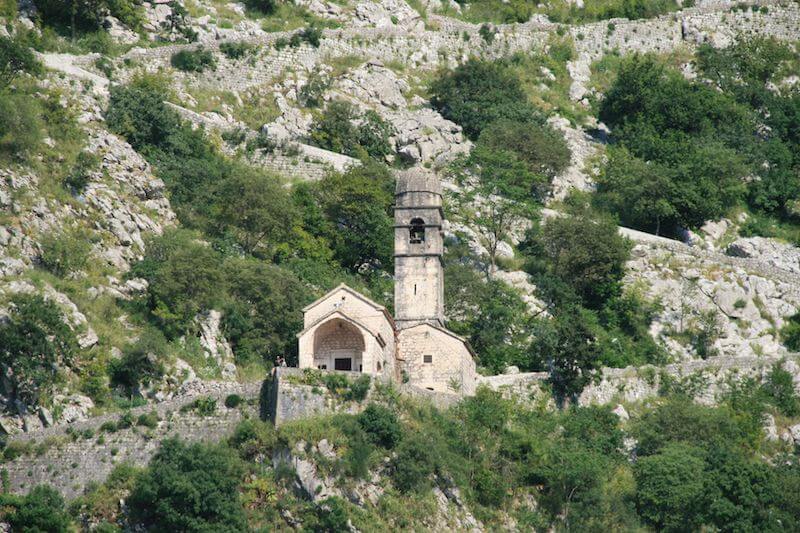
I sat in a café in the Old Town sipping a macchiato (at the San Giovanni, if you must know) and watched the brave and hardy trudge up the more than 1350 steps towards the confusingly named fortress, whose official name is St Ivan, but to locals it’s St. Giovanni – which translates to St John Fortress for visitors. They began their climb with a spring but, as they advanced, they began to slow, probably once the full realization of their ambition caught up with them.
Kotor’s cats (and the Cats Museum)
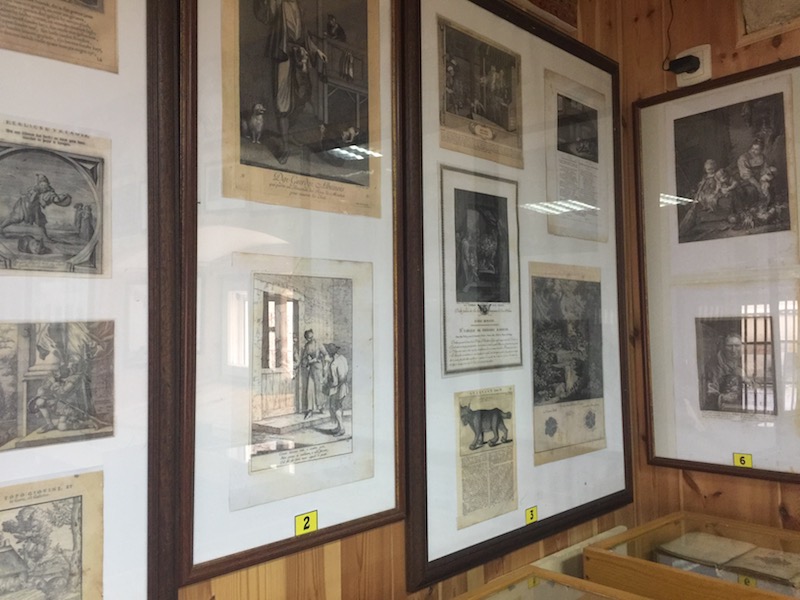
Many cities have cat cafés, but Kotor’s affection for its feline residents reaches new heights. Here, the cats have their own museum – a small but delightful collection of feline-themed memorabilia, from vintage etchings to whimsical postcards.
Kotor’s cats likely arrived centuries ago on merchant ships and stayed to hunt mice and snakes in the surrounding hills. Today they wander the old town, sleek and well-fed, unconcerned by passing tourists.
Homage to these cats is paid by the Cats Museum, which also helps feed the town’s population of strays. The entrance fee and small shop support this effort, so it’s worth stopping by – even if just to admire the eccentric displays.


When to visit Kotor (and How to dodge the crowds)
Kotor is not a well-kept secret, with tens if not hundreds of thousands of visitors every summer. Walking through the old town at high noon, even in the rain, can feel crowded.
BUT—not all is lost. You can avoid the crowds in Kotor.
The busiest hours are roughly between 10 am and 5 pm. Arriving early or lingering into the evening allows for a quieter experience. Ducking into side streets and smaller alleys also helps – most tour groups remain near the main squares.
Cruise ships on the Bay of Kotor
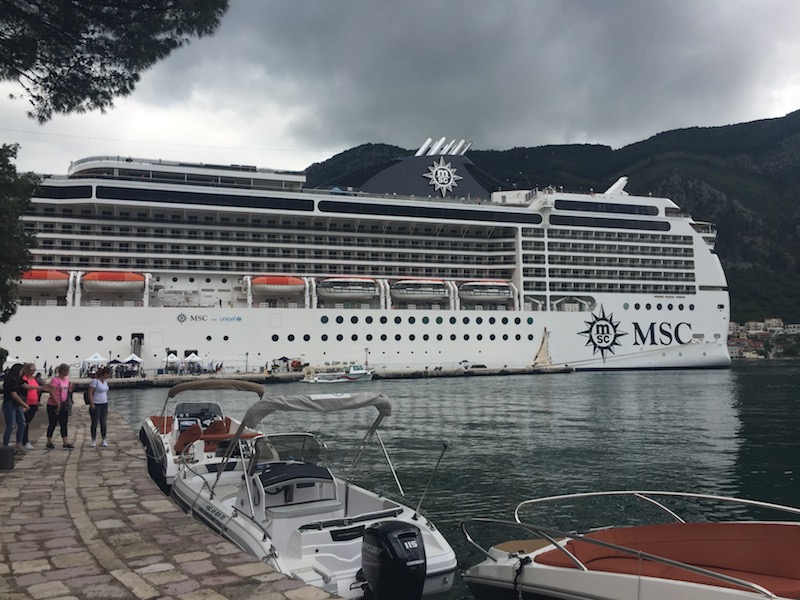
Kotor is a major cruise port, welcoming large ships that can double the town’s population for several hours. Even outside high season, two or more ships may dock at once. Check cruise schedules when planning your visit, and explore early or late in the day to avoid peak crowds.
Eating in Kotor (seafood wins)
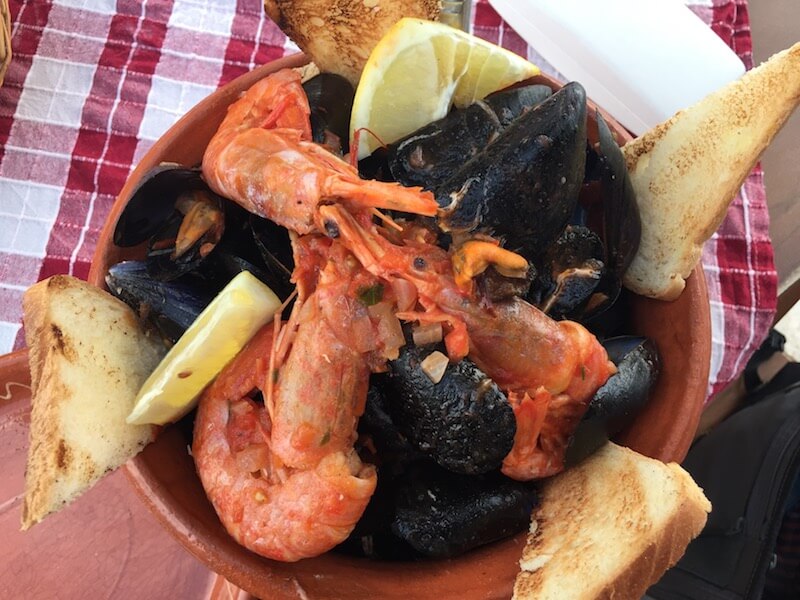
Seafood is Kotor’s strength. Local restaurants serve crisp fried calamari, pasta with shrimp, and steaming pots of mussels. Fresh fish is often priced by weight, so ask before ordering to avoid surprises.
One highly rated spot is Konoba Akustik, about five minutes from the old town at the start of Dobrota. It’s a favorite for grilled seafood and Montenegrin specialties. Many of the best restaurants are inside the old town, but Akustik remains a reliable choice with a relaxed, local feel.
Staying by the water: Dobrota on the Bay of Kotor
While staying within Kotor’s old town has its charm – the entire area is a UNESCO World Heritage Site – many travelers prefer Dobrota, a peaceful waterfront neighborhood that stretches for several kilometers along the bay.
Elegant villas, small churches, and modern apartments line the promenade, with restaurants built on piers extending over the water. Tiny pebble beaches invite a swim or a quiet meal overlooking the bay.
It doesn’t get much better.
Exploring Kotor on foot
Walking tours offer useful context for Kotor’s layered history, though they can be pricey for solo travelers. Joining a group tour or booking in advance helps.
Exploring independently is just as rewarding: wander the alleys of the old town, follow the promenade through Dobrota, or climb toward the fortress for panoramic views.
Day trips on the Bay of Kotor: Perast and the Islets
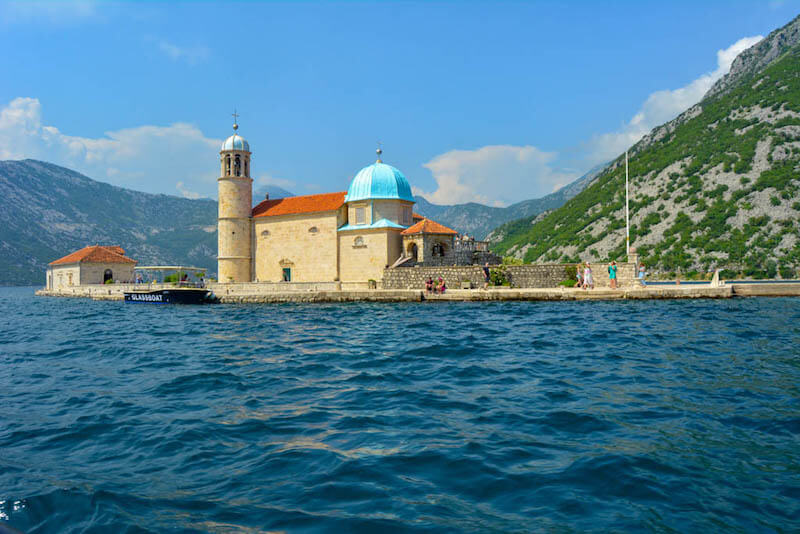
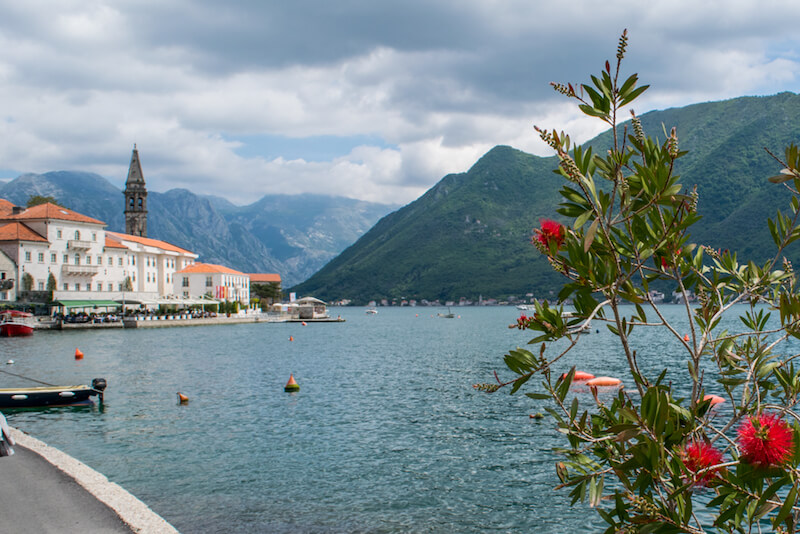
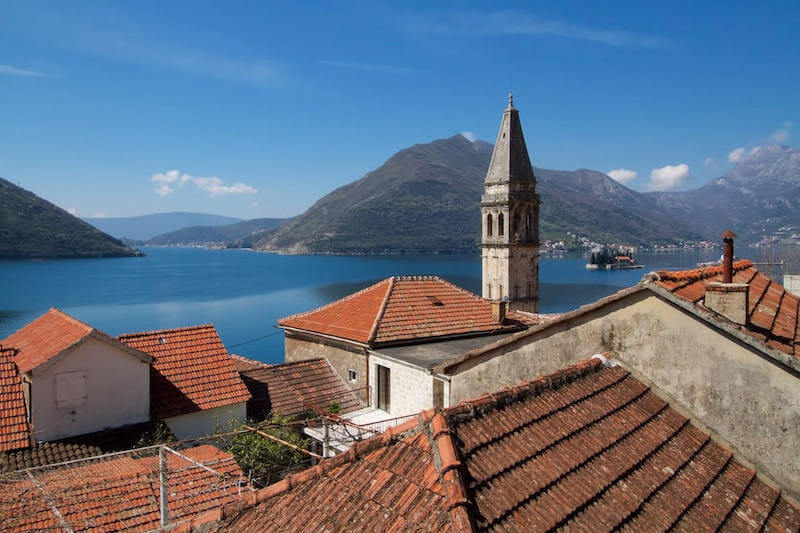
Even a short stay in Kotor should include a visit to nearby Perast, a tiny baroque village known for its waterfront palaces and churches. Just offshore lie two small islets – Our Lady of the Rocks and Saint George.
TRIPS YOU CAN TAKE FROM KOTOR
Our Lady of the Rocks is an artificial island built after sailors discovered an image of the Virgin Mary on nearby rocks in 1452. Every year on July 22, locals throw stones into the sea to reinforce the island, a custom known as fašinada. The church houses a tapestry embroidered by a woman awaiting her sailor’s return – she wove strands of her own hair into the design, which has since faded from black to grey.
Boat tours also reach the Blue Cave, Mamula Island, and Lovćen National Park, about 20 km from Kotor, where the mountains that gave Montenegro its name rise steeply from the sea.
Saint George is worth visiting for its 12th-century monastery.
If you happen to find a tour headed towards Lovcen National Park, about 20 km away, then take advantage and go. This full-day tour of Montenegro also includes Lovcen, home of the “Black Mountain” which gives Montenegro its name.
A few practical observations about Montenegro
Kotor feels orderly and safe, with visible police presence keeping traffic and crowds under control. Parking rules are enforced, and cars parked illegally may be towed.
Abandoned or unfinished buildings appear here and there, remnants of past construction booms – a curiosity for urban explorers.
Montenegro uses the euro, even though it isn’t a member of the European Union. Roads are generally good, though drivers sometimes treat the center line as optional. The country has been independent only since 2006 and is smaller than the US state of Connecticut.
Montenegro banned smoking in indoor public spaces in 2019, but enforcement varies. Dental care is notably advanced and affordable, drawing visitors for treatment.
And a final bit of trivia: the internet domain .me belongs to Montenegro, marketed internationally much like .tv for Tuvalu.
Practical tips for visiting the Bay of Kotor
Getting there: The nearest airport is Tivat (TIV), only 8 km from town. Buses connect Kotor with Podgorica and Dubrovnik, or you can hire a car and driver. You can also visit for the day from Tirana, the capital of Albania.
Best time to visit: Spring and autumn bring fewer crowds and pleasant temperatures; midsummer can be very busy.
Crowd avoidance: Visit early morning or after 5 pm, and check cruise ship schedules before planning your day.
Currency: The euro is used throughout Montenegro.
Food: Try local seafood and ask about fish prices before ordering, as they’re often listed per 100 g.
Walking: The old town is compact but paved with smooth stones – wear shoes with grip.
Staying: Dobrota offers a quieter base than the old town, with direct access to the bay.
Tours: Many boat tours depart from Kotor’s waterfront, including routes to Perast, Our Lady of the Rocks, and the Blue Cave.
If you liked this story, pin and save for later!