
Travel stories tend to be about places, or at least about how we look at a place through a specific geographic or cultural lens.
But sometimes, travel stories are also about issues. Here’s why.
1) Like it or not, travel is a political act. When we choose to spend our money in a country, we are – at least tacitly – supporting what happens in that country. If a restaurant or hotel is government-owned, our money goes into that government’s pockets.
2) What we do affects people at our destination. When we eat in a restaurant, we are helping it earn money, whether it exploits its workers or not. When we buy a souvenir, we are supporting a workshop or factory, whether it uses child labor or well-paid staff. When we spend our money on responsible travel companies, we may be helping preserve the planet.
3) It’s all very well to worry about our own issues (there’s no denying such things as travel budgets, safety or single supplements are important parts of travel) but it’s at least as important to worry about the world around us.
4) We can be a force for good in the world and still enjoy ourselves. Why shouldn’t we contribute to the common good while we’re having fun? Selfishness is all the rage in some quarters…
That said, it’s a lot easier to ignore all this and zip off to see beautiful sunsets, bask in luxury and eat delightful foods. That may well be our plan, but our actions affect others in ways we might not have considered.
I love seeing the world as much as the next person, but I don’t want to leave it worse off as I pass through – hence my efforts to travel responsibly, to be a responsible traveler.
I may not always succeed, and in fact I have made classic mistakes – like taking selfies with animals in captivity, until I realized how wrong that was – but each time, I learned from my mistakes. These days I make sure I’m deeply informed about the place, the politics, the social issues. By doing that research, I’ll be in a better place to make a contribution, however minor.
But first – what is responsible travel and tourism?
At its most primal, responsible travel is about doing the least harm to people and places, and the most good.
Often, we err because we simply don’t know what we should be doing. We’d like to do the right thing, but the right thing isn’t always clear.
A hotel that tells us it’s conserving energy by asking us to turn out lights or not replacing towels, so we assume it’s an ethical travel company exercising ethical tourism when all it’s doing is pretending to do the right thing for its bottom line (it’s called greenwashing).
Definition of responsible tourism
Responsible tourism is any form of tourism that can be consumed in a more responsible way. “Responsible tourism is tourism which: minimizes negative social, economic and environmental impacts. generates greater economic benefits for local people and enhances the well-being of host communities.
That said, an increasing number of companies are walking the talk and behaving responsibly. Travelers, too, are becoming increasingly conscious of their impact and are either altering their behavior or seeking travel companies that match their ideals.
There are plenty of (relatively) modest actions we can all take to do our part to be ethical or responsible when we travel.
Culturally responsible travels
- Be culturally sensitive and learn as much as you can about your destination’s cultural etiquette before you go. Try to blend in with the culture around you. Don’t be offensive, however much you value your ‘rights’ as an individual.
- However, when culture is harmful, don’t engage! In some cultures harming animals is perfectly all right, for example bullfights and dogfights. You wouldn’t condone these at home, right?
- Be destination-wise. Some destinations are more mindful than others about preserving their cultural heritage, for example by forbidding you to climb all over their ancient buildings or asking you to avoid entering ancestral lands. Visit with your eyes open or choose another destination. Maybe stay away from places already plagued by overtourism.
- When you visit sites where people have suffered, explore the meanings of dark tourism and disaster tourism before you make up your mind and choose an appropriate destination, one in line with your worldview.
- Learn to communicate in your host country’s language. No, you don’t have to become fluent in Mandarin but a few simple phrases like please or thank you will go a long way. So will “Can you help me” and “What is the word for…”
- Don’t give money to street beggars, especially children. They are often exploited by gangs and in the case of children, begging keeps them out of school or even makes them prey to sex traffickers.
- Be open-minded. You can carry your opinions with you, but share them sensitively. You are not always right – not even close.
Economically responsible travel
- Buy locally. The closer to the producer you buy, the more likely local people will benefit.
- Make sure your tour operator and tourist dollars aren’t just making multinationals rich. Engage in pro-poor-tourism and help keep money in local communities, where it can fight poverty.
- Be sensitive when you spend. The art of haggling may be alive and well, but don’t bargain as though your life depends on it. It may be a few pennies to you, but a day’s food to someone else.
- Understand that working conditions in the tourism industry are among the worst in the world. Hold that thought when calculating your tip or preparing your complaint about slow service.
- Where you can, use ethical travel companies. These aren’t always easy to identify, but a business that offers you a vacation close to local people and communities or which is run by locals within the country might be a better bet than an international corporation because, at the very least, the money will circulate within the local economy. (There are many caveats to this, as global companies can be very ethical and local companies destructive: try to get personal recommendations or find out more.)
Environmentally responsible travel
- Pack wisely before you travel. Leave all the packaging behind or you’ll be polluting your destination.
- Be environmentally aware. Don’t waste water or food – they may be scarce where you are. Don’t litter or leave waste behind. Offset your carbon emissions by using a carbon calculator.
- Be careful about contact with wild animals or animals in captivity, for example riding elephants or petting tigers. Find out more about animal-friendly travel. Wild animals who end up in captivity don’t get there willingly – they are hunted and their parents killed. The animals are often drugged or tortured to learn to obey. To be on the safe side, avoid any tours that include physical interaction with wild animals.
- You can get close – just visit a rescue center, where animals are being cared for and prepared for a return to the wild.
- Beware of endangered species and make sure you don’t buy any products made from rare animals or plants, for example, ivory or coral or a local “magic medicine” made from an endangered plant.
Politically responsible travel
- Think twice about travel to countries with dictatorships or regimes that flout human rights. You might want to consider boycotting them and spending your money elsewhere.
- Stay away from places that have been carved for tourism out of people’s lives, for example by pushing people out of neighborhoods (with over-speculated Airbnb conversions) or by displacing populations to make room for resorts.
- And to those who say “but tourism employs people and helps a place develop by improving infrastructure”, well, yes and no. All it takes is an earthquake or a terrorist attack or rampaging epidemic (we have seen this with Covid) and those tourism dollars will dwindle and disappear. Meantime, the natural habitat, which might have provided locals with the means of some survival, will have been destroyed and those left jobless will move to cities, which have enough problems already…
Following all these recommendations won’t guarantee a completely damage-free trip, but it will show your hosts you are concerned and caring, and it will make a difference on the impact of your journey.
Climate change travel
Some call it climate change travel, global warming tourism, or the tourism of doom. It’s all the same: travel to places that are endangered and might soon disappear.
Wanting to see a place before it is gone forever is understandable – it really is a once-in-a-lifetime chance.
But how ethical is it? Your visit may actually be contributing to the problem so you should think seriously before you take that trip.
Let me give you an example. Some years ago as a journalist I traveled to the Amazon rainforest to write about tree felling and rubber tapping. I may have been on assignment, but that didn’t stop me from enjoying my surroundings. But here’s the thing: plenty of other travelers were doing the same.
The result? More forests felled to make way for roads to carry tourists; more trees felled to make way for ranches to raise cattle that contribute to greenhouse gases and feed the tourists; razing of mangroves and other areas to make way for tourism development; the disappearance of species as their natural habitat is destroyed; the contribution of additional carbon dioxide to the atmosphere by extra flights put on for tourists. And the list continues.
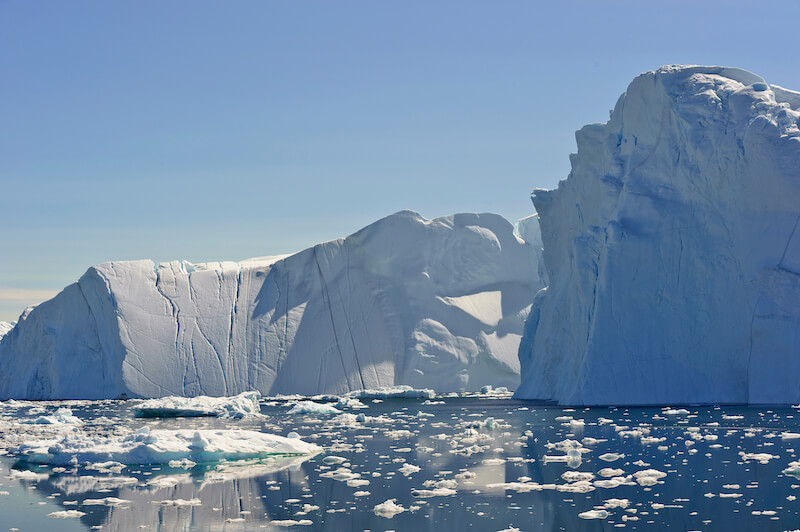
Another example of climate change travel is Arctic travel – getting to the ice mass before it melts. The same goes for the Alps, whose glaciers are retreating yearly. Or visiting the Maldives before they are covered by the ocean.
It’s that human instinct to “see things before they’re spoiled.” Problem is, we may be part of the spoilage. If you’ve ever been to the East coast of Spain, you’ll know exactly what I mean. Tourism now accounts for 5% of carbon emissions worldwide – and tourism is on the rise.
Should you go at all?
If you decide that you can engage in your bit of climate change travel without making the problem worse, there are still some things you can do to help:
- Are you flying? If so, make sure you calculate your carbon emissions and offset them.
- Think fuel-efficient. Drive instead of flying. Bike instead of driving. Walk.
- Make a contribution to an environmental charity that is protecting the site you are visiting.
- Travel green. If you’re using a company – and in some far-off places you may have to – check their environmental track record.
- Reuse towels. Turn lights off. Don’t litter. Recycle.
- Take fewer trips and stay longer.
If you decide to go
Plenty of other regions are in harm’s way: low-lying coastal areas, especially the most populated and poor ones; water tables and snow-covered mountains whose covers are melting; poorly-built settlements in the way of tornadoes, cyclones and other increasingly violent natural phenomena; underwater treasures of coral and reefs, which will die if the water warms up too much.
How do you decide on climate change travel?
Not easily.
Some countries threatened by extinction are encouraging – even begging – tourists to visit: the extra income will help finance their resettlement when disaster does eventually strike.
Others will argue that by plowing money into a community, those who live there will quickly see the economic advantages of conserving their environment and the benefits of ecotourism.
However you resolve this dilemma, if you do engage in climate change travel, at least make sure you don’t do too much damage while you’re there.
Carbon offset flights: how to fly without harming the environment
Air travel is one of the most inefficient – aka environmentally unfriendly – ways to explore the globe today, and those of us who care about these things must try to balance our love of adventure with our love for the planet.
One of the simplest and most popular ways of easing this guilt is to buy carbon offsets. But is this enough? Does an airline carbon offset really work? And what other things can we do to be eco-friendly while still trotting the globe?
While this may be moot right now, travel will pick up again and it would be nice if we could avoid repeating the mistakes of the past.
Why is air travel so bad?
As a global industry, aviation has been trying (with mixed results) to clean up its act for the last three decades. In fact, carbon emissions for passengers are now around half as low as they were in 1990, yet there are many more flights.
At first sight it sounds promising, but we should mitigate our enthusiasm.
By early 2020, more people were flying than ever before, mostly as a result of the soaring popularity of low-cost carriers (10 euros for a flight, anyone?) and increasing demand. According to the latest available statistics, in 2019, more than 4.5 billion passengers were recorded globally.
At the time, that number was expected to double by 2037. And global carbon dioxide emissions – 2.4% of which come from our travels – were set to triple by 2050. While the coronavirus has upended these figures, there is no question that whatever the outcome, flying will have to become more environmentally sustainable.
According to carbonbrief.org, “If aviation were a country, it would be the sixth-largest in the world, between Japan and Germany.”
The flight-shaming trend
It’s not really breaking news that air travel is a big offender when it comes to climate change – so why has it increasingly been in the headlines?
Even before the lockdowns and travel bans, we could see a swelling interest in all things green and sustainable, fueled by climate change activists and advocates such as Greta Thunberg and her actions over the past year. Her travels received broad media coverage as she tried to crisscross the globe as efficiently as possible by train – or via two epic catamaran trips across the Atlantic ocean to attend the COP 25 Climate Change conference.
It should come as no surprise, then, that the latest trend of flight shaming originated in Greta’s country of birth – Sweden.
Known as “flygskam,” this movement encourages (or at times, bullies) people into considering whether they really need to fly or not. This growing trend could see flight shaming be as big as plastic straw shaming was over the last few years.
Apparently, the peer pressure had an effect – in Sweden, at least. In 2019, airports nationwide recorded a nine percent reduction in domestic flights, and its major airline noted a two percent drop in passengers compared to 2018.
Now, in light of the new world we are facing, that consciousness is if anything expanding. While some people may believe life will return to normal, most feel that ‘normal’ will not be something we know. Given the danger posed by a virus and our realization of the precariousness of life as we know it, it would make sense for societies to want to preserve what exists and diminish pressure on our natural world.
What is carbon offsetting and how do carbon offsets work?
Carbon offsetting is a way of balancing out our impacts on the globe – in other words, our carbon footprint – by investing in projects that reduce carbon emissions.
By purchasing carbon offsets for flights, we can contribute to reducing negative environmental impacts on our planet.
Here’s how it works: we purchase ‘shares’ in projects that help renew our environment by reducing carbon dioxide in the atmosphere.
Projects may involve planting trees (or letting them grow for longer), reducing or catching greenhouse gases that come out of landfills, supporting projects that offer alternatives to fossil fuels (such as wind farms), or paying a local farmer to change farming practices to reduce greenhouse gas emissions.
How can I use carbon offsetting to make up for my flight?
Here’s where most of the hard work is done for you. There are numerous programs around that provide carbon offset options, and a great many of these are targeted especially to flyers.
Some airlines simply allow you to tick a box when you reserve: you offset your flight using one of the airline’s own projects.
Alternatively, you can jump online and do it yourself with a reputable program, many of which include a flight carbon calculator so you know exactly how much carbon you need to offset for your flight.
If you’re looking for a standalone carbon emissions flight calculator, make sure it’s from a recognized agency, like this one from the International Civil Aviation Organization (ICAO) or this one at Atmosfair.
How much does it cost to carbon offset a flight?
Prices vary depending on where you’re looking, but as a guideline, Carbonfund provides offsets starting at $20 for flights of up to 10,000 miles (approximately 16,000km), but prices vary widely.
Is carbon offsetting legitimate?
Just like any scheme, you may need to do a little bit of homework. Of course, there are projects out there that don’t do what they claim to, or perhaps are not as robust as they ought to be.
Here’s how to choose a good carbon offset program
When looking for the right program, here are a few criteria you should apply.
- Make sure the program has external (third-party) regulation by a trustworthy agency such as Climate Action Reserve, Verified Carbon Standard, Climate, Community, and Biodiversity Standard, Verra, or the American Carbon Registry, along with some environmental groups such as the Rainforest Alliance.
- Each metric ton offset should have a unique serial number to ensure it can’t be sold over and over again.
- Look for projects that wouldn’t exist without the carbon offset program.
- Each project should be transparent and clearly explain how the offset works.
- There should be a backup plan – in other words, if they plant a tree and it dies, what will replace it?
Most popular verified carbon offset programs
These are among the most popular verified carbon offset programs:
You can also use the searchable databases provided by verification agencies like Climate Action Reserve and American Carbon Registry.
For bonus karma points, you could select a project that has humanitarian benefits, like this award-winning Cookstove Program in Sudan. Or opt for something meaningful to you personally, like a local project in your home country or in one of your most beloved travel destinations.
How else do you fly green and make air travel cleaner?
Flight shaming is only part of the equation because we don’t need to be shamed in order to think about minimizing damage to the environment. Still, some tough decisions need to be made, especially in the coming months, and not only by us.
What about the industry? Shouldn’t they be held accountable?
Yes. And they certainly are – increasingly so!
In 2016, the United Nations came up with a plan entitled the Carbon Offsetting and Reduction Scheme for International Aviation (CORSIA). A whopping 192 countries voluntarily agreed that any rise in international emissions from 2020 onwards would be offset.
In addition to this agreement, individual airlines are stepping up their efforts to be sustainable. Carbon offsetting is the equivalent of a guilt-ridden vampire donating blood at a blood bank. How about just not doing the damage in the first place?
It’s not quite so simple, unfortunately. Lower emission biofuels are being developed and electric aircraft may be in our future, but for now, 100 percent sustainability is not possible.
In the meantime, plenty of providers are jumping on board. Many have carbon offset options for passengers, and some are replacing frequent flyer programs with carbon offset rewards. Here are some industry examples of promises made before travel came to a halt in March 2020:
- JetBlue, Cathay Pacific, Qantas and United have pledged to increase their use of biofuels
- JetBlue has even gone as far as promising to become fully carbon neutral by using offsets, alternative fuels, and offering more direct flights.
- Delta say they will cut air travel co2 emissions by half before 2020 (link above)
- British Airlines will be carbon neutral on domestic flights.
- EasyJet had planned to be the first major airline in the world to offer net-zero-carbon flights across its entire network.
While these are laudable examples of the airline industry’s efforts to attempt to mitigate the damage done, the post-corona environment will see whether these promises are maintained or dissipate in an effort to claw back lost profits.
How can I fly without guilt?
You can’t.
Both studies and experts agree that not flying is the greenest option.
But this is not always practical, particularly if you live in a country that is isolated from the rest of the world. Not everyone has the time, patience, income or inclination to go on an extended cruise from Australia or New Zealand to Europe or North America.
That said, you can minimize the damage in the following ways.
Sleep as you go
If you are traveling in Europe, there may be greener options such as rail travel, one of the most efficient methods of transport.
Even if your time is limited, you might be able to take a sleeper train (or bus) to get where you’re going. No day-time wasted, and you get to wake up in a new destination well-rested – in theory, anyway.
Mix business with pleasure
If possible, combine your business trips with your holiday time. Perhaps you can do some research and find a nearby location you’d love to explore that can be reached relatively quickly and easily from your business destination. Ultimately, it will mean one trip less for you – and for the planet.
Make the technology work for you!
Even better, skip the business travel altogether if you can! Video calling and video conferencing are cheap and easy and if nothing else, the lockdowns have taught us that we can do almost anything with Zoom. Do you really need to get on a plane or can the job be accomplished online?
Fly for longer
Longer flights are normally more efficient per kilometer travelled than shorter connecting flights. Takeoff and landing are the least efficient parts of the journey, and planes use less fuel while cruising. If possible, choose a direct flight instead of one with stopovers (and if you do have a stopover, here are some ways to make them less tedious!)
Skip the luxury
It stands to reason that the more people you can fit onto a plane, the more efficient the overall flight per passenger becomes. If you’re taking up a seat in business class or first class that could squeeze two or three extra people in, your emissions will be 3-9 times as high as if you were traveling in economy.
Travel light
The heavier the aircraft, the harder it has to work, which in turn means higher emissions. Learning to travel light and only take carry-on is not only better for the climate, but it helps you be a more carefree, flexible traveler!
Do your research
Compare the different airlines to see which ones are doing the most for the environment.
If you’d like to dive a bit deeper and find out what makes a sustainable airline, Alternative Airlines is a good place to start. The website has a comprehensive list of providers and outlines what each is doing. If you want to take it even further, you can research how efficient the plane is, whether they use single use-plastics, and get into the details of their sustainability practices.
Be a slow traveler
Rather than zipping around the world trying to see as many countries as you can, slow down a little and take it all in. Staying in one or two places for longer can significantly reduce your carbon footprint, as well as helping boost the local economy more meaningfully – not to mention that you’ll have more authentic experiences and get off the beaten path a little.
Offset your carbon
Of course, if you’ve exhausted all other options and decided you still need to fly, carbon offsetting is a good idea and can keep your carbon footprint under control. It’s not a panacea, but it will help.
Responsible travel resources
- CREST – a non-profit research institution that studies the positive impact of responsible travel
- Ethical Traveler – a non-profit that empowers travelers to behave ethically and “change the world”
- Responsible Travel – an independent and activist clearinghouse of local tour operators committed to responsible travel
- Tourism Concern – has campaigned against abuses in tourism but sadly ran out of funding and shut down – but their website is still up with plenty of resources
- UNWTO – the UN intergovernmental organization that promotes responsible, sustainable tourism and universally accessible tourism
— Originally published on 31 July 2011
PIN THESE PICTURES AND SAVE FOR LATER!